
They can be beautiful and dramatic, a fiery kiss on the horizon, a celestial tapestry of playful colour and light.
But, at this time of year they are so damn early.
We're speaking, of course, of Kelowna sunsets.
And starting this afternoon and for eight more afternoons after that, the sun will shockingly set in Kelowna at 3:56 pm.
That's the earliest the sun will sink below the horizon all year long.
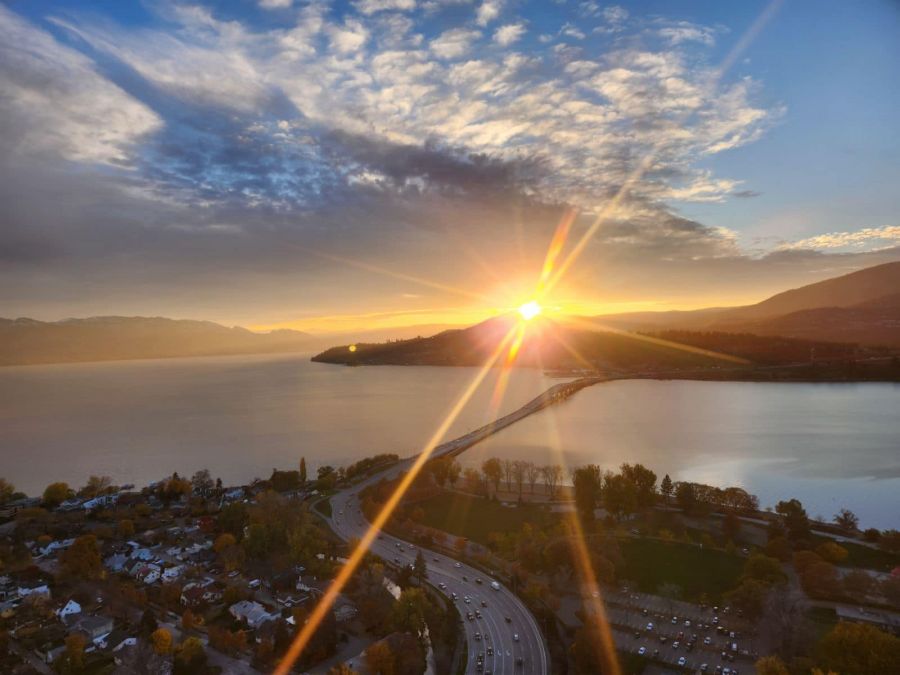
Not only is it an amazing astronomical fact about the sun -- the most important star in the galaxy to Earth -- but, it's also melancholy.
After all, we don't get to see the sun for very long on these days.
What light there is seems especially weak and insipid, particularly on a cloudy and cold day.
The darkness that follows a premature sunset seems tragically inky and exacerbates any chill in the air.
It's a cue to huddle indoors early for either a long, boring evening or some delightfully cozy cocooning of cooking a hearty meal, sipping some red wine and snuggling on the couch in front of the fire to watch TV or read.
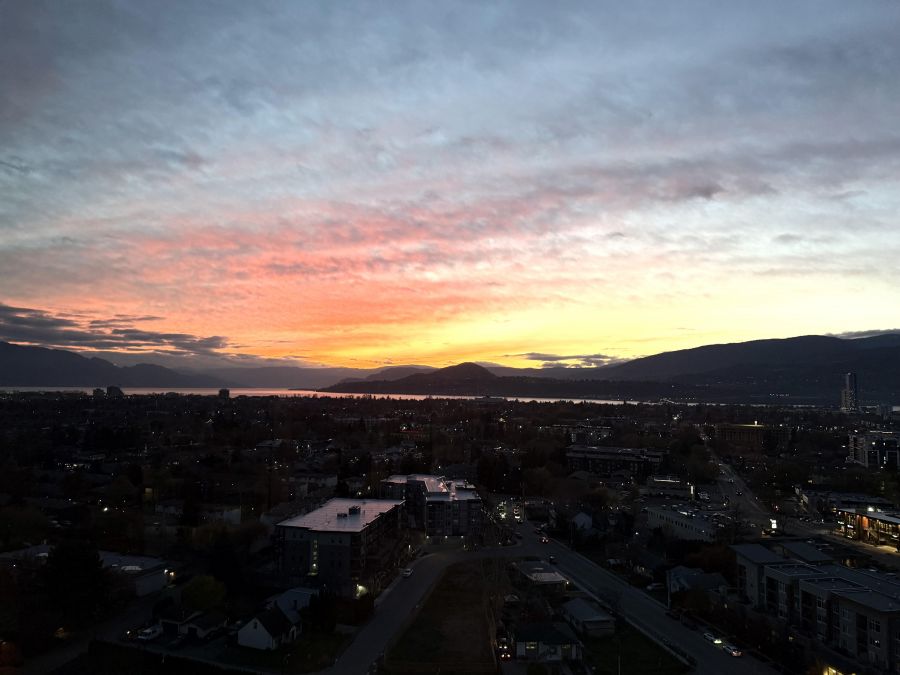
You'd actually have to be paying close attention to notice any difference in the sun's early setting habits this time of year.
The website https://www.
Yesterday the sun set at 3:57 pm.
So, the 3:56 pm setting time today through Dec. 15 is barely detectable.
As will be Dec. 16 when the sun sets just a minute later at 3:57pm.
"We don't directly mention sunrise and sunset times in our weather forecasts," said Environment Canada meteorologist Bobby Sekhon.
"But, indirectly, they are a consideration. When it comes to forecasting temperatures, the short days associated with late sunrises and early sunsets mean the sun is not as powerful, there's less heating time during the day and longer cooling periods overnight."
The sun's appearance also plays a factor in forecasting when morning fog may burn off.

But, back to today.
On this day, Sunday, Dec. 7, the first of nine days of 3:56 pm sunsets begins.
The day started with a late 7:42 am sunrise, meaning that with an early 3:56 pm sunset, the amount of light, or daylength, is a scant 8 hours, 14 minutes and 12 seconds.
While the next eight days will all have 3:56 pm sunsets, the amount of light will actually be shorter because the sunrises on those days get ever later, from between 7:43 am and 7:59 am.
And then, on Dec. 16, the sunset creeps back up to 3:57 pm, however, sunrise on that day is later at 7:50 am, making for an ever shorter day of 8 hours, 6 minutes and 36 seconds.
All this gradual time shift for sunrises and sunsets counts down to the shortest day of the year, the winter solstice, on Dec. 21 when the sun rises at 7:53 am and sets at 3:59 pm for a minimal day length of 8 hours, 5 minutes and 27 seconds.
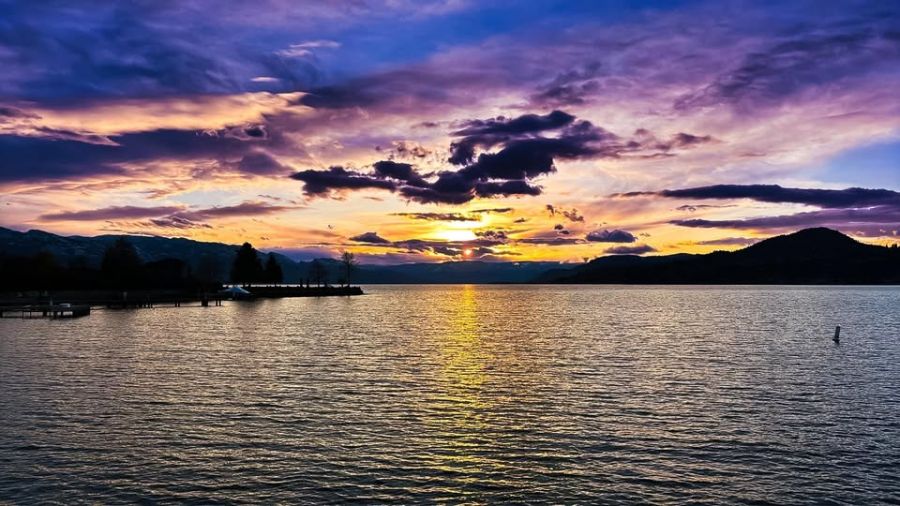
Good news, day length gets incrementally longer and longer from then on until it peaks at the summer solstice, June 21, 2026, with a 4:49 am sunrise and 9:10 pm sunset, for a gloriously long day of 16 hours, 21 minutes and 3 seconds.
If you reveal in the tiniest details of sunrise, sunset, daylength, time zones and weather, then you and I can continue to constantly check out the aforementioned Time and Date website.
For those of you who prefer a less dorky and obsessive approach, just know the days are short right now, the sunsets early and the opportunities abound to hygge at home and prepare for Christmas in the comforting twinkle of artificial light.