When it comes to naming full moons, we humans love to keep it literal.
For instance, tonight's (Sunday, Feb. 1st's) full moon has been called the snow moon, storm moon, ice moon, hungry moon and bear moon by Indigenous peoples for time infinitum.
The snow, storm, ice and hungry moon monikers are self-explanatory because February, especially the early part of the month, can be the snowiest, stormiest and coldest of the year in British Columbia and the rest of the Northern Hemisphere and in olden time times such conditions made food scarce.
Bear moon maybe needs a little more clarification.
That's because February is when mama bears give birth to their tiny cubs in winter dens.
Thus said, there's no snow in the weather forecasts for the Okanagan, Kamloops, Victoria and Prince George this snow full moon day.
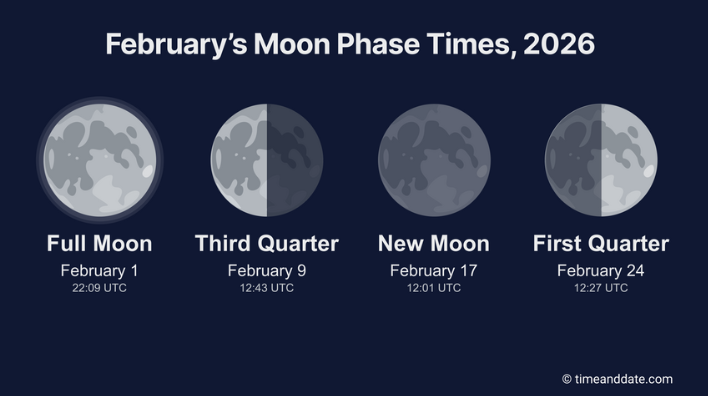
Astronomically speaking, the snow moon is full at precisely 2:09 pm today (Sunday) -- the moment when the sun and the moon are on opposite sides of the Earth with the moon's illuminated side facing the night side of earth.
If that's too technical for you, just look up into the night sky and the moon will glow fat and bright.
In fact, for the past couple of nights the moon has been so round and shiny that it's appeared full.
And, it will appear full for the next couple of nights after tonight's official full moon.
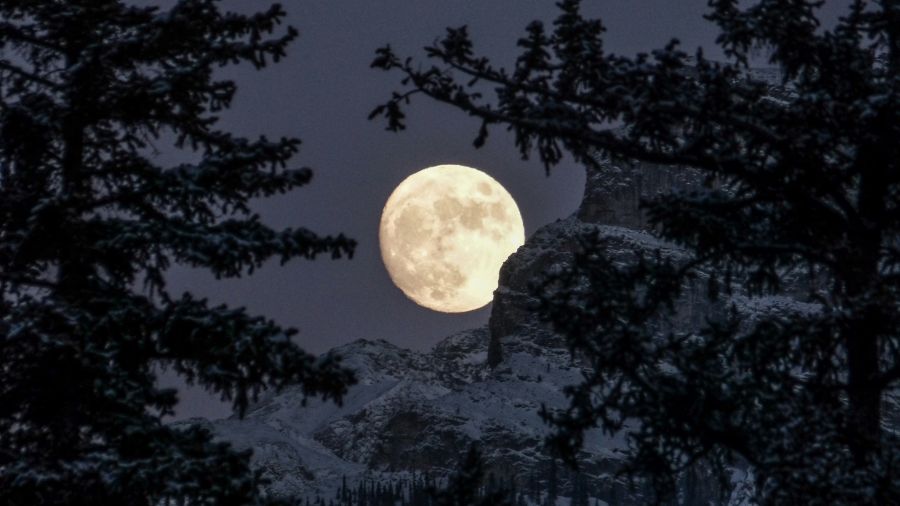
If you're lucky, you might catch a daytime glimpse of the fading full moon just before sunset or just after sunrise.
Humans have always been fascinated by full moons.
It's a miracle of the heavens and the Earth.
Plus, for all of history, full moons have been used to illuminate whatever happens to be going on that month from planting, hunting and harvesting to shivering in the cold, admiring the first flowers of spring and spreading honey on toast.
(See the list of all the full moons throughout the year for further explanation.)
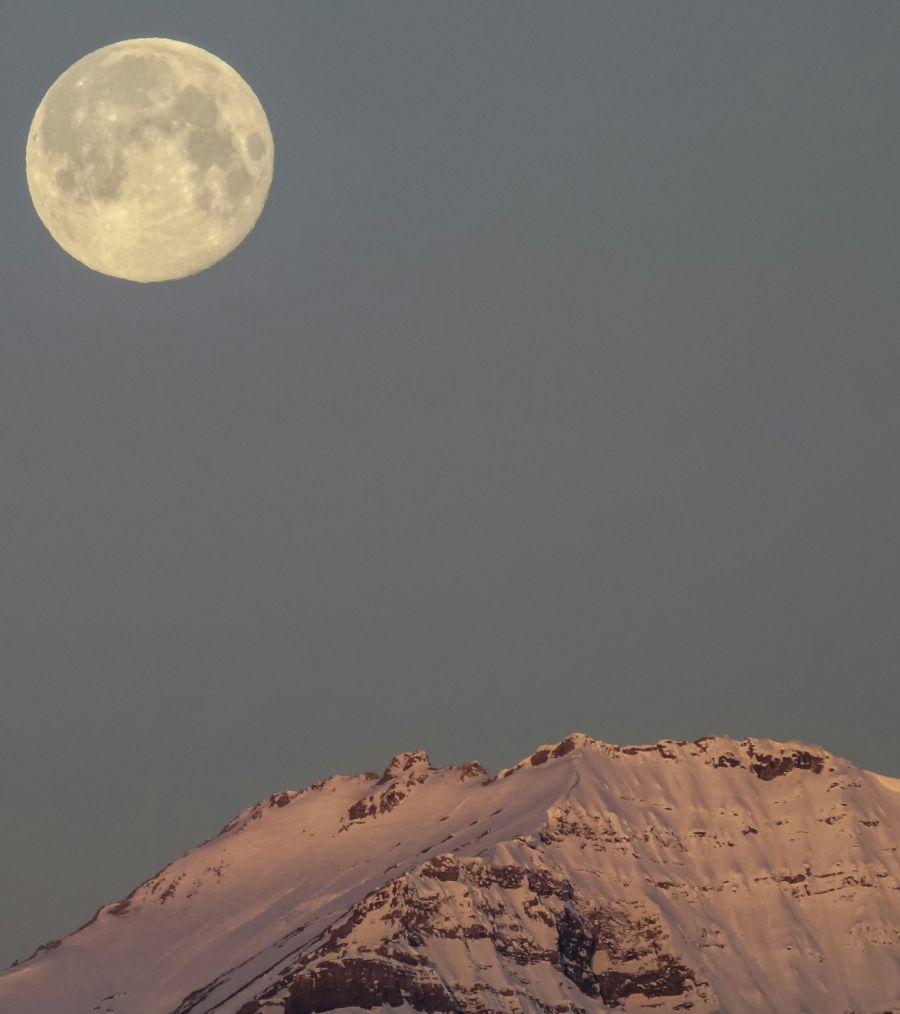
Back to some astronomy talk.
It's called 'syzygy' when the moon is between the sun and Earth in a straight line creating the full moon effect.
2026's full moons:
- January 3 - wolf supermoon (so named for appearing extra big and bright and after wolves howling at the moon because they're hungry)
- February 1 - snow moon, bear moon, cold moon and ice moon
- March 3 - worm supermoon (named after their first appearance in spring)
- April 1 - pink moon, egg moon, fish moon
- May 1 - flower moon, hare moon, corn-planting moon
- May 31 - blue moon (So called because it's the second full moon in a month -- which only happens once every two or three years -- and in the 16th century blue was part of phrases meaning 'impossibility'. Today, we have the saying: Once in a blue moon.)
- June 29 - strawberry moon, honey moon, rose moon
- July 29 - buck (as in male deer) moon, thunder (as in storm) moon
- August 28 - sturgeon moon, grain moon, green corn moon, black cherry moon
- September 26 - harvest moon
- October 26 - hunter's moon
- November 24 - beaver supermoon
- December 23 - cold supermoon