Over the past two weeks, thousands of federal government employees received letters warning they may lose their jobs.
The cuts are part of the federal government’s plan to reduce overall spending and boost defence, with 16,000 layoffs expected in the next three years.
It’s not clear yet exactly what positions are being cut. But according to the largest union in Canada’s federal public sector, workers in the government’s health, transportation, foreign affairs and public safety departments have all been told their departments will start to see layoffs.
Public Service Alliance of Canada national president Sharon DeSousa said in a Friday press release the cuts would undermine critical public services.
“While the government’s planned cuts may appear to save money, make no mistake, we all pay the price through slower services, longer waits, and weaker programs,” DeSousa said.
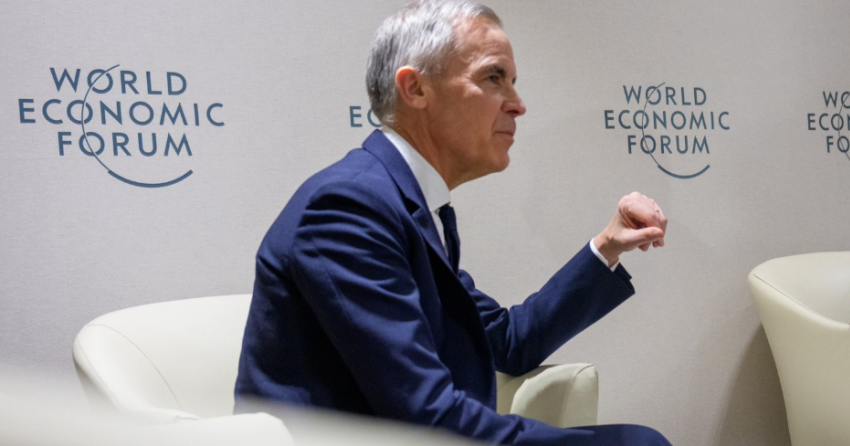
Some policy experts are also sounding the alarm. In the same week government workers learned their jobs may be at risk, Prime Minister Mark Carney told the World Economic Forum that Canada will aim to forge new economic and security relationships as the “international rules-based order” collapses.
While a Global Affairs Canada spokesperson said the department will still be able to deliver on international priorities, foreign policy consultant Lauren Dobson-Hughes said laying off Global Affairs employees will hinder Canada’s ability to meet those goals.
“The work doesn’t just do itself; it’s done by Global Affairs officials,” said Dobson-Hughes, who is principal consultant at LDH Consulting.
“We’re undermining our own agenda if we eliminate the tools we need to protect ourselves and thrive in this bold, new world.”
The federal government warned cuts were coming last year.
Despite running on a platform to cap — but not cut — the federal public service, the Liberals’ budget committed to cutting about 4.5 per cent of the government workforce.
The budget required most federal departments and agencies to cut overall spending by 15 per cent, in part to boost spending on military and defence.
This month, the layoffs arrived.
The Public Service Alliance of Canada, or PSAC, said nearly 6,500 members have received notices this year that their department or agency is entering a “workforce adjustment.”
According to PSAC, the affected departments include Health Canada; Global Affairs Canada; Transport Canada; Fisheries and Oceans Canada; Environment and Climate Change Canada; Public Safety Canada; Canadian Heritage; Immigration, Refugees and Citizenship Canada; the Administrative Tribunals Support Service of Canada; the Canada School of Public Service; and Innovation, Science and Economic Development Canada.
The Professional Institute of the Public Service of Canada, or PIPSC, represents more than 85,000 public sector professionals primarily in the federal government.
The union confirmed Shared Services Canada, Public Services and Procurement Canada, the Atlantic Canada Opportunities Agency, Canada Economic Development for Québec Regions and the Treasury Board of Canada Secretariat are also affected.
Global Affairs Canada spokesperson John Babcock said in an email the department is sending these notices to more people than it actually plans to lay off in an effort to “maximize voluntary departures.”
He added the department is still committed to diversity, supporting employees and ensuring it continues to deliver on Canada’s international priorities.
According to Babcock, the department plans to reduce its workforce by up to 13 per cent in the next four years in an effort to achieve $1.12 billion in savings by 2029. He said more precise workforce adjustment numbers are being validated by the Treasury Board before they are made public.
The latest available data from the Treasury Board shows Global Affairs Canada employed 7,657 people as of 2025 — putting a 13 per cent reduction at just under 1,000 employees.
“Despite these changes, it is important to note the majority of [Global Affairs’] budget — about 85 per cent — remains intact, reaffirming the Government’s commitment to advancing Canada’s international engagement and priorities,” Babcock said.
Julien Abord-Babin, acting chief of media relations at Statistics Canada, said in an email the agency is expected to lose 850 positions plus about 12 per cent of its executive team.
The latest Treasury Board data available shows the agency has 99 executives (at Statistics Canada, the term “executive” covers a number of management positions).
Abord-Babin said that since Jan. 12 executives have been meeting personally with affected and surplus employees.
“Statistics Canada remains focused on serving Canadians and adapting to future needs as we move through this period of change,” he said.
It’s not clear exactly how many cuts can be expected within each department and agency and which jobs will be affected.
But PIPSC president Sean O’Reilly warned in a press release Friday the cuts will have a tangible effect on Canadians.
“These are not abstract programs or administrative red tape,” he said. “These are the experts who prevent oil spills from becoming catastrophes, who ensure dangerous goods don’t explode on our railways, who make sure Canadians can trust weather warnings, and who protect species from extinction.”
On Tuesday, Prime Minister Carney announced that Canada aims to manage economic uncertainty by creating new trade and security partnerships abroad.
Economist Kaylie Tiessen said the government will need public servants to make sure new deals are implemented responsibly.
“As we’re renegotiating or negotiating new trade deals, I want to make sure that the right guardrails and rules are set in place to make sure that we maintain our sovereignty,” said Tiessen.
“In order to do that, we need people in place to make it happen. That’s what I’m worried about.”
Tiessen is chief economist at the Canadian SHIELD Institute, a policy think tank focused on the country’s economic sovereignty and resilience.
She said cuts to Statistics Canada could slow down efforts to create new trade relationships.
“We need good, detailed data in order to make good decisions about trade deals, the rules we set, what industries we are trying to bolster, and whether or not it’s working,” Tiessen said.
“With fewer people to collect and process that data, there will be potentially less data, or it will lag.”
She added she was particularly concerned to hear about cuts to Public Services and Procurement Canada, which oversees government purchasing, less than a month after Ottawa announced new procurement rules that would prioritize Canadian goods and services.
Dobson-Hughes said the department will need to use all its assets to responsibly implement new trade and security relationships — including staff.
“These are short-sighted cuts, and they will harm the government’s own stated goal,” she said.
“If Mr. Carney is serious that this new geopolitical reality requires Canada to get serious and get real, then we cannot go ahead with laying off the very people whose jobs it is to carry out that agenda.”