A remote beach at the northwestern tip of Vancouver Island is promoted on social media and international travel lists as a “hidden gem” for its sweeping pale sand, sea stacks, tide pools and open shoreline — scenery often compared to Hawaii.
But the journey to San Josef Bay, near Cape Scott Provincial Park, follows a long, rough route through an active forest area.
For many visitors, that part of the trip comes as a surprise after a blown tire, a damaged rental vehicle or the realization they cannot call for help.
“There’s no cell coverage up there,” said John Tidbury, a Port Hardy councillor and operator of the North Coast Trail shuttle service. “So forget about yourself; it’s only good for photographs.”
Chris Lindsay has spent the past decade leading trips to San Josef Bay as owner and guide of Cove Adventure Tours. He said he is increasingly stopping to help people stranded or struggling along the route.
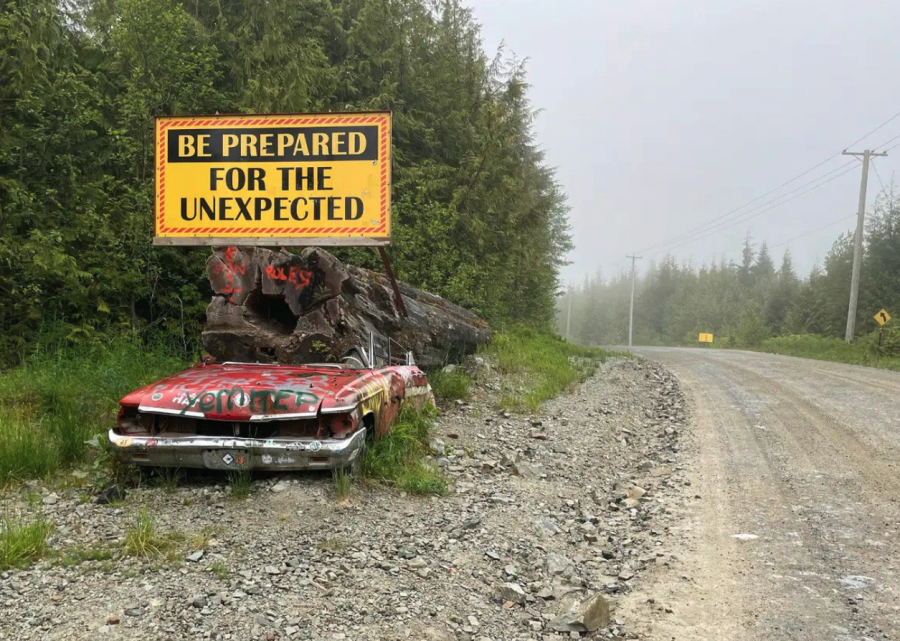
Many visitors are arriving in low-clearance cars or rentals that are not allowed on service roads, or vehicles equipped only with temporary spare tires. Others push too fast over rough sections, increasing the risk of blown tires, damaged undercarriages and crashes.
“You think automatically, ‘I’ll be there in an hour.’ And the reality is, you should budget two hours because of how slow it is and how much the road condition varies.”
Lindsay said visits have roughly doubled in the last three years. The uptick started after the COVID-19 pandemic when more Canadians started travelling domestically. It has been pushed further by Instagram and other social media posts.
The beach earned global recognition with a No. 36 spot on the World’s 50 Best Beaches list in 2023 and No. 43 on North America’s 50 Best Beaches in 2026, standing alongside destinations in Australia, Hawaii and the Cook Islands.
.png)
That attention has changed who is showing up. Lindsay said the beach once drew more experienced hikers and people familiar with the North Island. Now, he sees more day-trippers, younger travellers, families and visitors from farther afield — many of whom know the area mainly from what they have seen online.
Lindsay warns that as more visitors follow social media posts onto rugged logging roads unprepared for the journey, safety concerns are growing and the pressure is increasingly falling on local operators and nearby communities to respond.
The trailhead parking lot sits about 70 kilometres from Port Hardy, reached by a route that shifts from maintained roads to gravel logging roads. Visitors walk roughly 2.5 kilometres from the trailhead to the beach.
Tidbury, who regularly takes hikers to and from the trailhead, said the hardest section is the final 25 kilometres along San Josef Main, where potholes catch drivers off guard — especially because of the rain, dust and uneven surfaces.
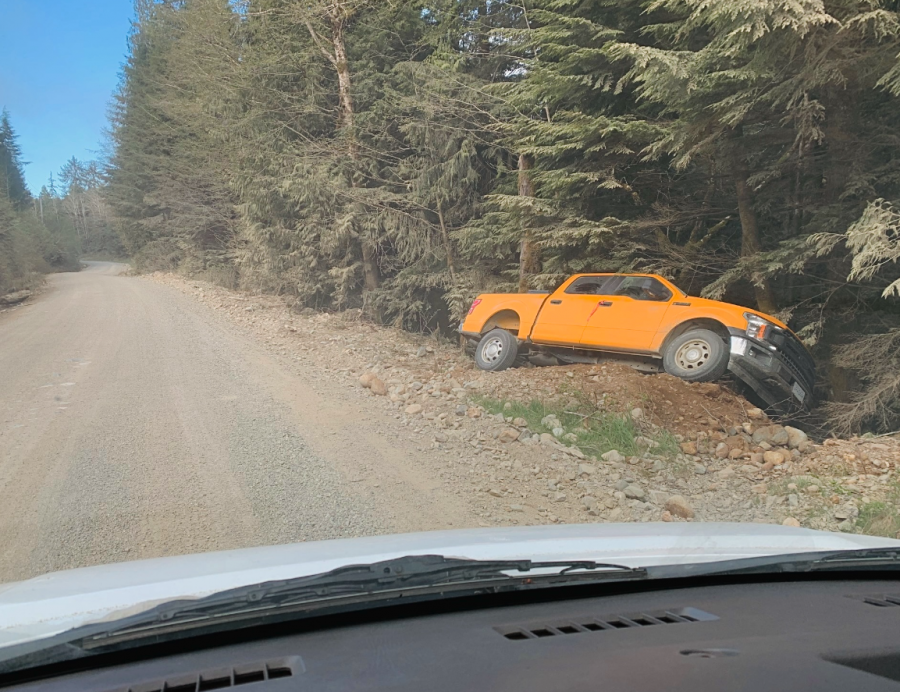
He said it is unclear who is responsible for grading that section, raising questions about how consistently it is maintained.
Lindsay said fresh grading can leave sections smooth, but dry weather can create washboard ridges that shake vehicles and make steering difficult.
Lindsay’s company runs 10-ply tires with aggressive tread and carries two full-size spares because the route is hard on vehicles. Most passenger cars, he said, use four-ply tires and often carry only a small temporary spare — enough to limp to a repair shop, not continue across kilometres of gravel.
Towing a vehicle from the parking lot back to Port Hardy can cost well over $1,000, Tidbury said.
.png)
The route also remains part of an active forest road network. Lindsay said logging has not been heavy near San Josef Bay in the past couple of seasons, but there are still work vehicles, commuter traffic and salvage hauling from previously logged areas.
Workers often use radios to warn one another of their location on narrow, winding roads with blind corners. Tourists without radios may have no warning when a large truck or work vehicle is coming.
Western Forest Products, which operates in the area, told Canada’s National Observer that forestry-related traffic is expected in June as operations progress, though schedules can shift with weather, wildfire conditions and operational needs. The company said signage has been posted at the entrance to its operations warning road users to watch for industrial traffic and drive safely.
The District of Port Hardy does not own or manage the road to the beach or provincial Park. But because most visitors pass through Port Hardy, the district often becomes the first place people call when something goes wrong.
“They tell me that they were driving, like, a Smart Car or like a little BMW or a Tesla, and completely wrecked the undercarriage of their vehicle,” said Heather Nelson-Smith, chief administrative officer for the District of Port Hardy.
She said the district has also heard of people leaving damaged vehicles in the middle of the road, blocking logging traffic and other drivers.
The issues extend to parking. Tidbury said both parking lots filled on long weekends last year, with vehicles spilling along the road toward the nearby campground. Some drivers parked in accessible spots or crowded the end of the lot near the trailhead, blocking the loop vehicles use to get in and out.
Nelson-Smith said there have been cases where people had to go out to the beach to find drivers whose parked vehicles were preventing trucks and other vehicles from passing.
Garbage is another growing concern. Nelson-Smith said visitors have called about the state of free camping areas along the route, where there are no garbage cans, because waste can attract bears and draw them closer to parking areas and people.
Visitors are expected to pack out what they bring in, but many do not. In a place this remote, Lindsay said, waste left behind can require coordination with BC Parks and even a helicopter removal.
Nelson-Smith added that garbage is sometimes left along roadsides or left in municipal pullouts, worsening existing dumping issues. In one case, someone dumped garbage into a pit toilet.
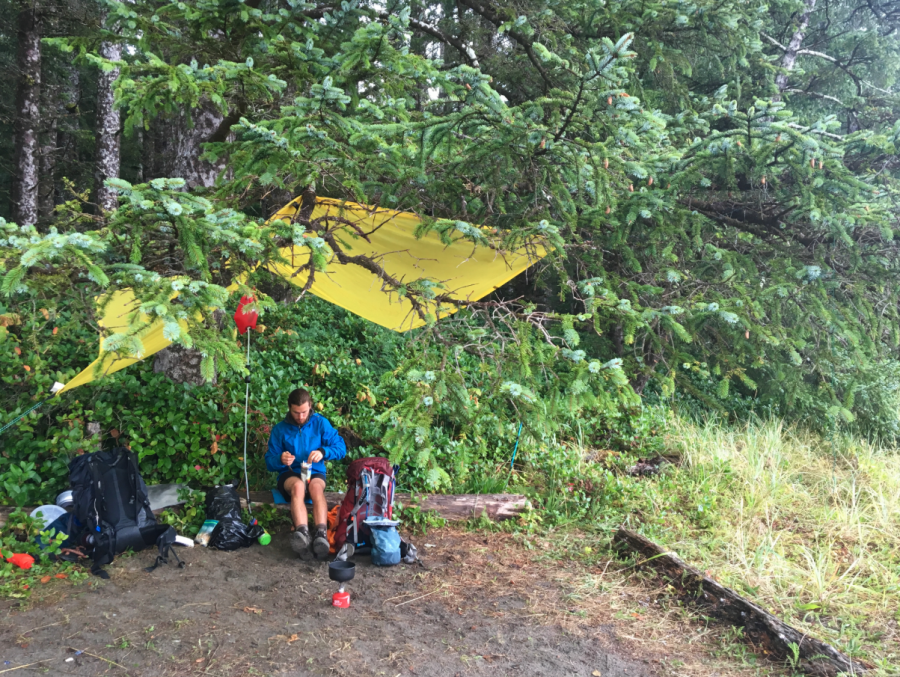
Some arrive in flip-flops or without hiking gear for changing weather. Others rely only on cellphones that stop working a few kilometres into the route. Lindsay said his company carries a satellite phone, satellite messenger and first-aid supplies on every trip.
The pressure is also being felt at the beach. San Josef Bay has about 20 to 25 campsites available on a first-come, first-served basis, set back near the trees, with more camping near a second beach. On long weekends, those areas can fill up. Lindsay said people who arrive without a plan may end up camping outside designated areas.
David B. Zandvliet, a professor at Simon Fraser University and UNESCO Chair in Bio-cultural Diversity and Education, said the region is drawing visitors from Alberta, the US and other countries who may be unfamiliar with local ecology, tides, weather risks and wilderness etiquette. That can lead people to make unsafe choices, such as camping too close to the tide line, underestimating how quickly wet coastal weather can cause hypothermia or leaving food and garbage behind in wildlife habitat.
Social media is also encouraging a more fleeting relationship with wild places: “They come in, they get their Instagram moment, take their picture, and they're like, off they go," Zandvliet said.
The visitor season is also stretching. Lindsay said May used to be quiet, with only a few vehicles in the parking lot. But now on a good-weather weekend, it fills up. Long weekends remain busy from early summer through the September long weekend.
He said staffing and maintenance have not kept pace. BC Parks contracts local company 43K Wilderness Solutions to manage Cape Scott during the peak summer period, Lindsay said, but their contract is only six weeks long. Outside that window, even as visitors continue to arrive, facilities may receive occasional servicing, but there is no regular staff presence on site.
In an email response, the Ministry of Environment and Parks said visits to San Josef Bay and Cape Scott Provincial Park have steadily increased in recent years, though it could not immediately provide specific data.
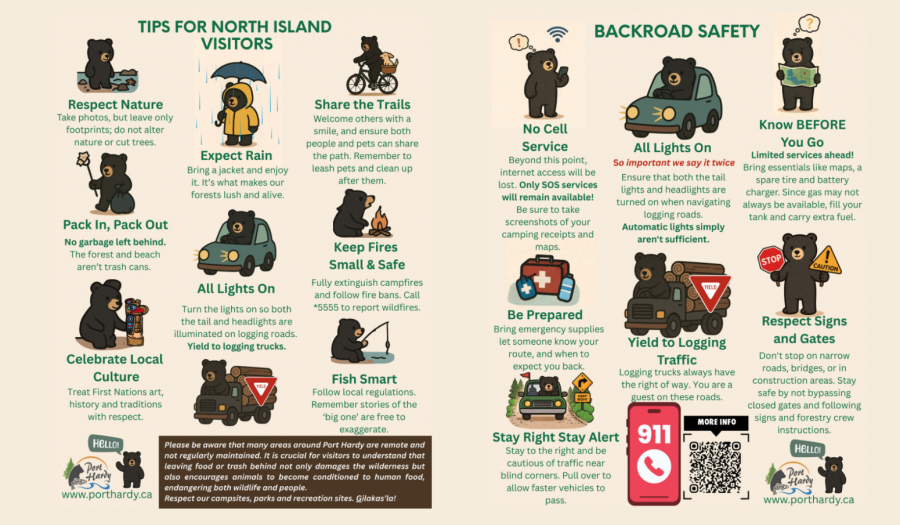
The ministry said public safety is the main concern heading into summer and is urging visitors to check the Cape Scott park webpage before travelling for advisories on trail conditions, hazards, parking and access.
It added improperly managed wildlife attractants are a key concern and additional food caches and signage are being installed to remind visitors how to store food and other attractants safely.
It recommends visitors check advisories before leaving, avoid hiking alone, tell someone their route and expected return time, carry extra clothing and emergency gear, bring enough water, monitor daylight and distance and carry navigation and communication devices, such as a charged cellphone, GPS, compass or personal locator beacon.
Nelson-Smith pointed to Tofino as an example of a coastal community that faced similar pressures before bringing in more formal controls, including paid parking, traffic management and designated access points.
Zandvliet said Tofino also shows how tourism can change a place once seen as remote and wild. As visitor numbers grew, the area saw more hotels, development and pressure on nearby ecosystems. At Long Beach, people are now discouraged from walking dogs because wolves have been preying on pets — a shift he said may be connected to habitat loss and wildlife becoming more accustomed to people.
Nelson-Smith said Port Hardy is not trying to keep people away from San Josef Bay. Their goal is to make sure visitors understand what they are getting into before they go. The district is trying to get ahead of the summer season with signs and public reminders, even though the road and park are outside its jurisdiction.
They are sharing information through its visitor centre, website and newsletters and exploring whether private shuttle services could help reduce traffic, parking congestion and vehicle damage.
“We want you to have a really good time,” Nelson-Smith said. “We just want you to make sure that you're safe.”