
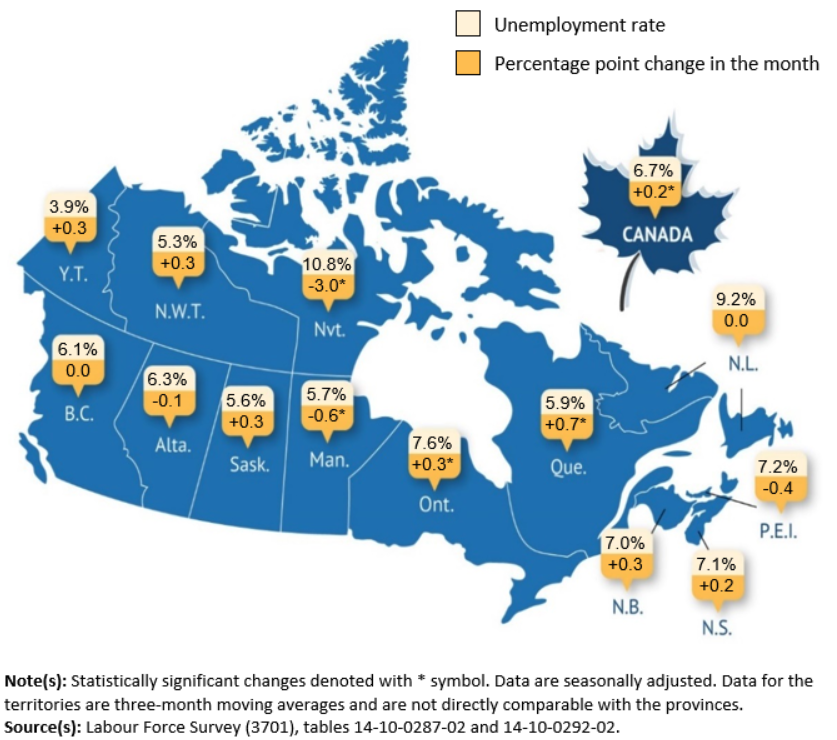
Statistics Canada says the labour market deteriorated sharply in February, with a surprise loss of 84,000 jobs pushing the national unemployment rate up to 6.7 per cent.
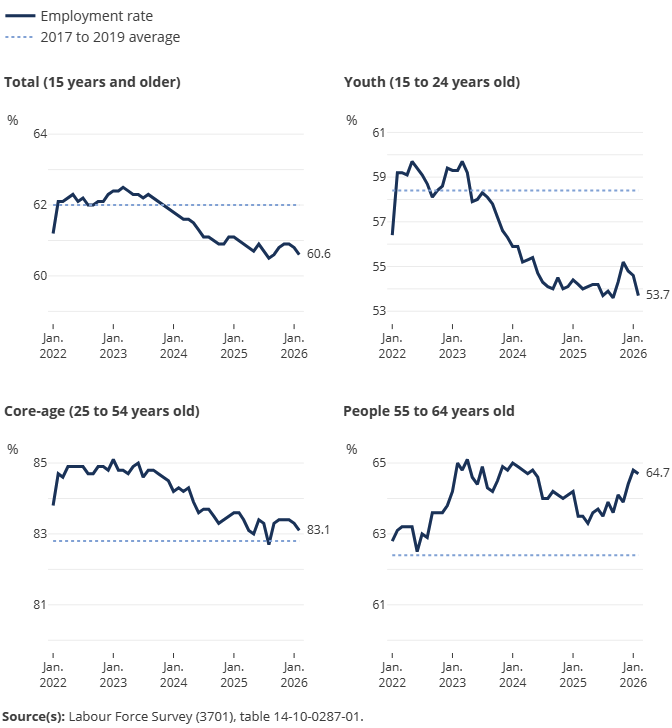
The agency said employment fell 0.4 per cent in February, following a smaller decline of 25,000 jobs in January, while the employment rate slipped 0.2 percentage points to 60.6 per cent.
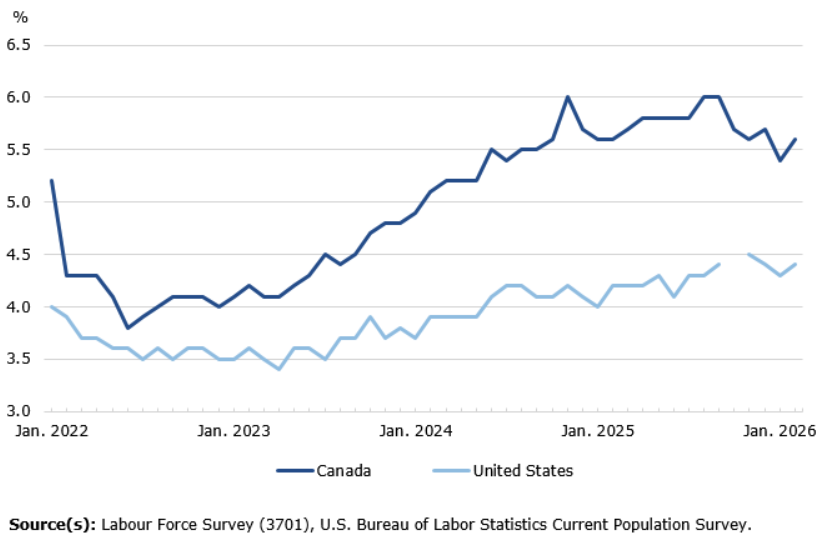
The unemployment rate rose 0.2 percentage points from January and remained just below the recent high of 7.1 per cent reached in August and September 2025.
The losses were concentrated in full-time work, which fell by 108,000 positions, while private-sector employment dropped by 73,000 for a second straight monthly decline. Public-sector employment and self-employment were little changed.
Younger workers were hit especially hard. Employment among people aged 15 to 24 fell by 47,000, pushing the youth unemployment rate up 1.3 percentage points to 14.1 per cent. Employment also dropped by 41,000 among core-aged men between 25 and 54, while core-aged women and workers aged 55 and older saw little change.
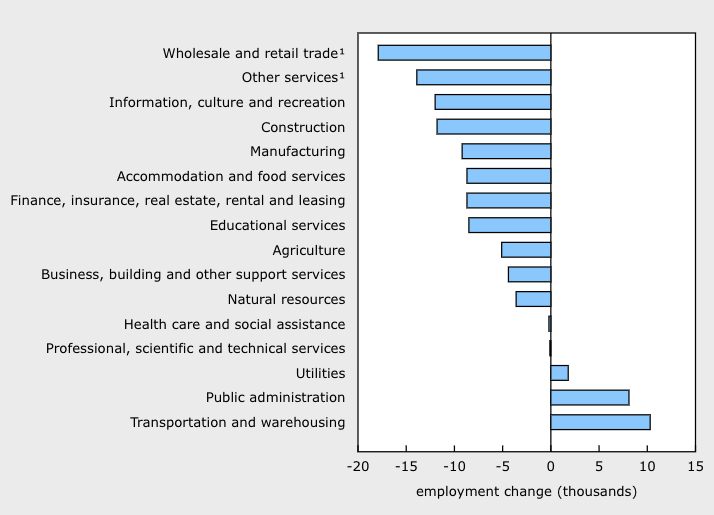
StatCan said job losses were spread across both the services and goods sides of the economy. The biggest declines came in wholesale and retail trade, which lost 18,000 jobs, and “other services,” a broad category that includes repair, maintenance and personal services, which shed 14,000. Construction lost 12,000 jobs and manufacturing fell by 9,200.
Provincially, Quebec posted the largest decline, losing 57,000 jobs, its first significant monthly drop since January 2022.
The province’s unemployment rate rose 0.7 percentage points to 5.9 per cent. British Columbia lost 20,000 jobs, while Saskatchewan and Manitoba also posted declines.
Ontario’s employment level was unchanged, but its unemployment rate rose to 7.6 per cent as more people looked for work.
In British Columbia, the unemployment rate held steady at 6.1 per cent even as employment fell, because the number of people searching for work was also little changed. Manitoba’s unemployment rate, meanwhile, fell to 5.7 per cent despite job losses because fewer people were looking for work.
Among B.C.’s major census metropolitan areas, the latest figures showed a mixed picture:
Vancouver: 6.2 per cent in February, down from 6.3 per cent in January.
Victoria: 4.5 per cent, up from 4.4 per cent.
Kelowna: 6.3 per cent, down from 6.8 per cent.
Abbotsford-Mission: 5.7 per cent, down from 6.3 per cent.
Chilliwack: 7.2 per cent, unchanged from January.
Kamloops: 3.8 per cent, down from 4.8 per cent.
Nanaimo: 7.7 per cent, up from 6.6 per cent.
Average hourly wages rose 3.9 per cent from a year earlier to $37.56 in February, up from 3.3 per cent annual growth in January.
StatCan also said 22.8 per cent of unemployed people were in long-term unemployment, meaning they had been searching for work for at least 27 weeks, a share that remains well above the pre-pandemic norm.
The weak report adds to signs the labour market has lost momentum after stronger hiring in late 2025.
StatCan said the February drop, combined with January’s decline, has partly offset the gains seen in the fall, leaving employment little changed compared with a year earlier.
BMO's chief economist, Douglas Porter, said the report today was "simply a brutal result."
He went on: "The near absence of net job growth in the past year is perhaps the most telling reading here. While a tough winter may have exaggerated the weakness at the start of the year, and a shrinking labour force is also weighing heavily on headline employment, the underlying story so far in 2026 is one of weakness."
Discussing the Bank of Canada's upcoming interest rate decision on March 18, he added: "Somehow, the market continues to price in Bank of Canada rate hikes for later this year, but if this employment report is at all indicative of underlying economic conditions, the last thing the Bank would be considering would be rate hikes."