
The five-member jury that heard the inquest into the 2020 death of Lake Babine Nation’s Everett Riley Patrick made five recommendations aimed at improving skills, policies and procedures in police cells.
At the Burnaby Coroners’ Court on Thursday, April 2, the jury returned around 11:30 am and the foreperson said the verdict was unanimous. The panel classified Patrick’s April 20, 2020 death in University Hospital of Northern BC accidental, caused by a subdural hemorrhage — bleeding in the brain — due to or as the consequence of a blunt force injury of unknown origin.
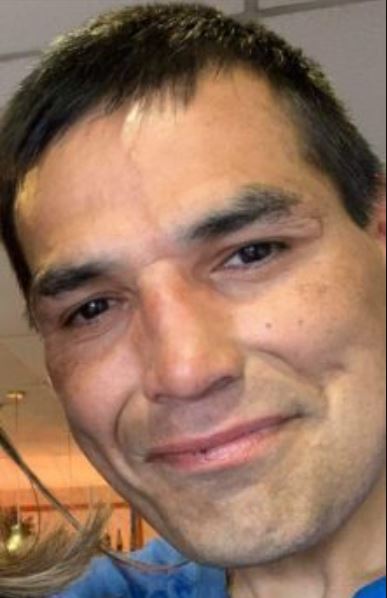
Officers had been called around 4:30 am on April 12, 2020 to investigate an alarm at firearms and ammunition dealer E&I Sports and arrested 42-year-old Patrick after a standoff. He suffered cuts, bruises and bites from a police service dog.
After emergency assessment and treatment by Dr. Matthew Janzen, at the University Hospital of Northern BC, an officer escorted Patrick to the cells at the RCMP detachment.
Janzen said Patrick did not meet the threshold for a CT scan.
However, Patrick suffered medical distress around 4 pm and was taken back to the hospital by paramedics. Almost eight days later, he died at 2:55 am in hospital.
The Independent Investigations Office, the civilian-led agency that probes police-involved injuries and deaths, recommended charges to Crown counsel in 2022, but none was filed.
The jury directed its recommendations to the Minister of Public Safety and Solicitor General, RCMP E Division and the City of Prince George.
The top recommendation was to improve cell guard training standards to provide trauma-informed care and ensure cell checks include a timely response to any concern for detainee wellness.
“The jury heard that cell guard training was limited to the informal shadowing of another cell guard,” the foreperson said.
Wellness-check training and standards should also be reviewed and guards should use verbal confirmation with detainees to determine their condition. The jury heard that “training and standards do not encourage routine verbal communication with detainees.”
The jury said civilian staff in detention facilities should receive mandatory cultural sensitivity training after hearing from RCMP Insp. Chris Riddle.
The watch commander the day that Patrick was in the Prince George detachment cells was, the jury said, “unsure if civilian staff received cultural sensitivity training recommendations to the RCMP national headquarters and E division.”
New technology should be adopted — specifically, a passive biometric monitoring system — in detention facilities to ensure detainee wellness. The jury heard that RCMP E Division and other Canadian police forces have piloted the technology. In 2025, the Surrey Police Service began installing scanners to monitor prisoners for abnormal heart rate and breathing.
“The jury heard the cell guard was limited to assessing the wellness of detainees through visual assessment only.”
Finally, there should be training to help officers and guards to recognize detainee non-compliance and medical distress, because witnesses made assumptions that Patrick was being uncooperative.
Kara Haack, a civilian guard employed by City of Prince George, testified March 31, that she conducted visual checks on Patrick from outside the cell over the course of several hours and believed Patrick was under the influence of drugs.
When the cell door was opened before 4 pm, Patrick did not move. Const. Ross Browne discovered Patrick had vomited. Haack called paramedics and he was wheeled away on a gurney, breathing from his mouth.
Presiding coroner Carolyn Maxwell and the jury heard testimony for 2.5 days. The jury deliberated for around 21 hours. Recommendations will be forwarded by the chief coroner to the appropriate ministry or agency.