
Kelowna International Airport doesn't have a FIFA World Cup contingency plan per se.
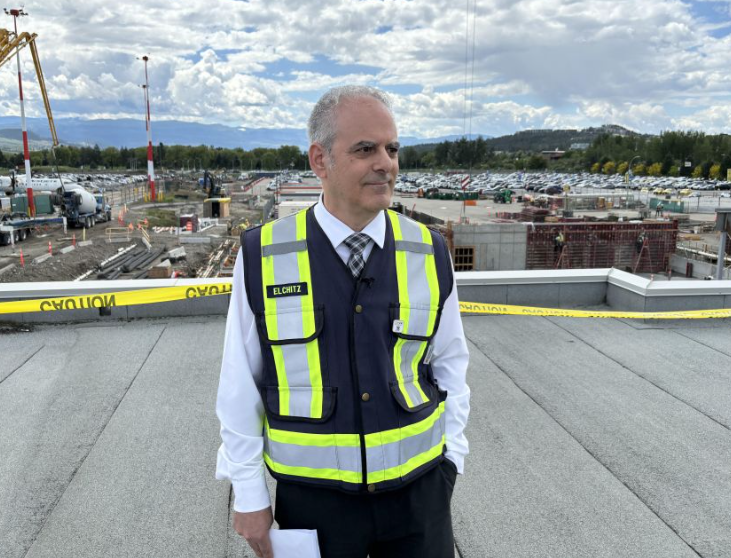
"But, we do know that the World Cup in Vancouver will see the flow-control program used more at Vancouver airport," said Phillip Elchitz, director of operations and innovation at Kelowna airport.
"And when flow-control is used in Vancouver it can affect outbound flights from Kelowna to Vancouver with delays. After all, the majority of passengers departing Kelowna are going to or connecting in Vancouver, Calgary or Toronto."
Let's explain.
Vancouver airport gets maxed as thousands of fans, athletes and media come and go for the seven World Cup games the city hosts June 13 to July 7.
To keep flow-control, air traffic controllers in Vancouver tell Kelowna airport that certain flights will have to delay take off because Vancouver airport can't accommodate the regularly scheduled arrival time.
If there's enough notice of the flow-control delay, passengers may stay in the terminal building and load and take off late.
Or, if flow-control notice comes after everyone has boarded the plane, it may sit at the gate or on the tarmac for a while waiting for go ahead from Vancouver.

Flow-control means exactly that -- the flow of airplane take offs and landings is controlled based on airport capacity and availability of air traffic controllers.
A shortage of air traffic controllers at airports across the country, including Vancouver and Kelowna, can mean delays, even on a regular day, let alone when the World Cup crush happens this summer.
In fact, the World Cup is expected to have a bigger impact on Vancouver -- economically, on accommodations, traffic and infrastructure -- than Expo '86 and the 2010 Winter Olympics.
The World Cup impact on BC airports came to light last week as the Canadian Air Traffic Control Association, BC Aviation Council and NAV Canada spoke about the continued shortage of air traffic controllers.
NAV Canada is responsible for hiring, training and employing air traffic controllers.
"Generally, we've had ongoing concerns with NAV Canada staff shortages at control towers in both Kelowna and Vancouver," said Elchitz.
"But, staffing levels have increased and the number of unplanned closures while air traffic controllers take fatigue breaks has reduced. NAV Canada and airports have a robust plan to deal with the increased flow associated with the World Cup."