
Statistics Canada says employment was little changed in March, with modest job gains following losses in the first two months of the year.
The agency reported a net increase of 14,000 jobs in March, after a cumulative decline of 109,000 positions in January and February.
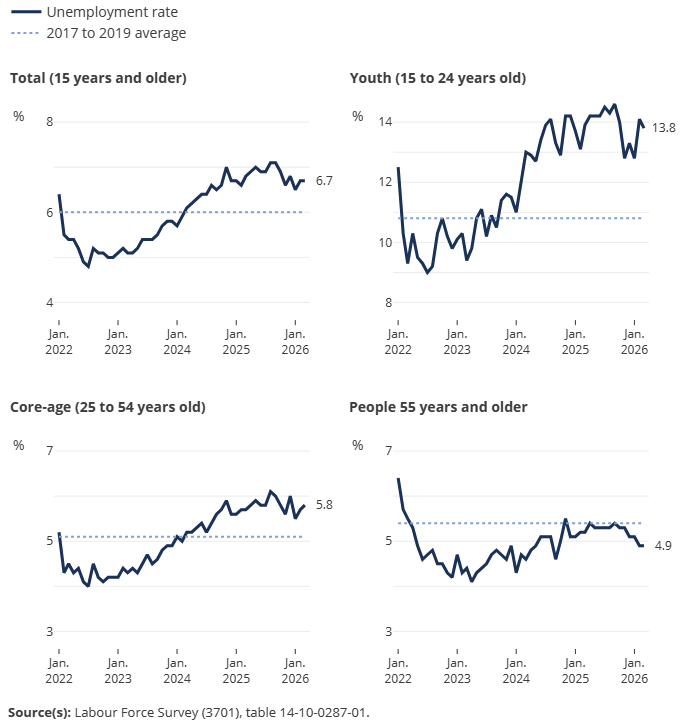
The unemployment rate held steady at 6.7 per cent, while the employment rate was unchanged at 60.6 per cent.
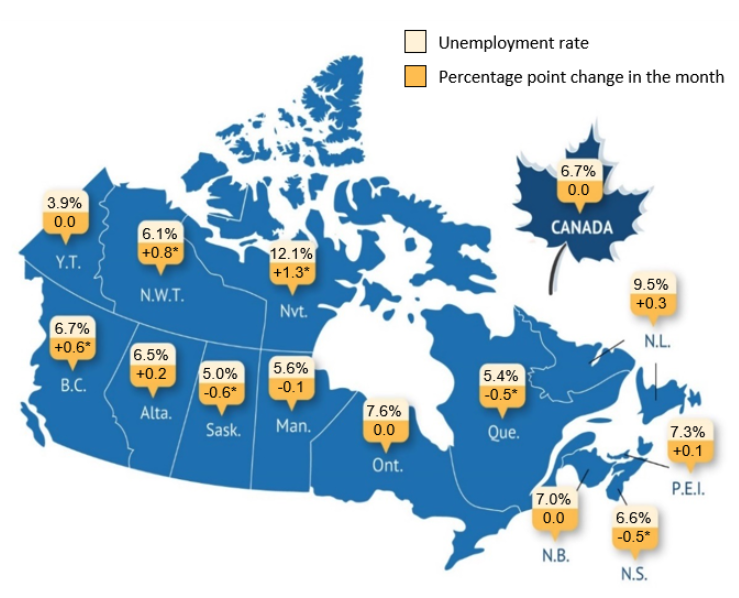
StatCan said there was little variation in employment across major age groups, as well as between full-time and part-time work and across the public and private sectors.
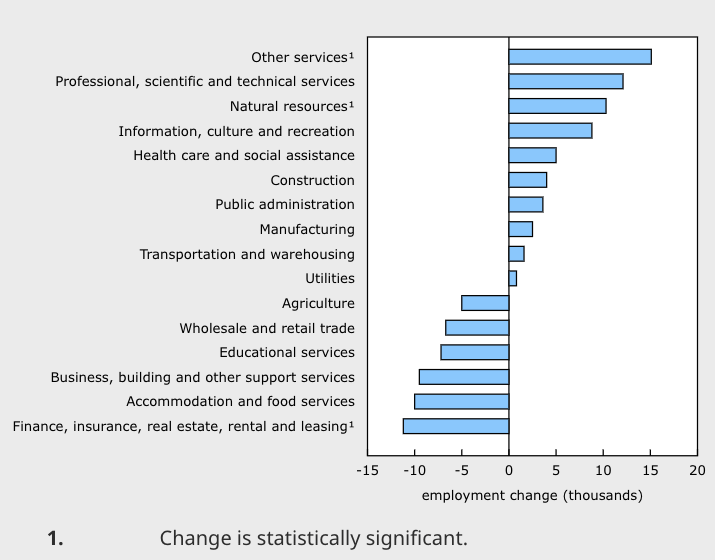
Job growth was led by the “other services” category, which includes personal and repair services, with an increase of 15,000 positions, offsetting a similar decline in February.
Employment also rose in natural resources by 10,000.
The finance, insurance, real estate, rental and leasing sector recorded a loss of 11,000 jobs, its first notable monthly decline since November 2023.
Employment in British Columbia fell by 19,000 in March, following a similar drop in February.
The province’s unemployment rate rose to 6.7 per cent, the highest since February 2016 outside the COVID-19 period.
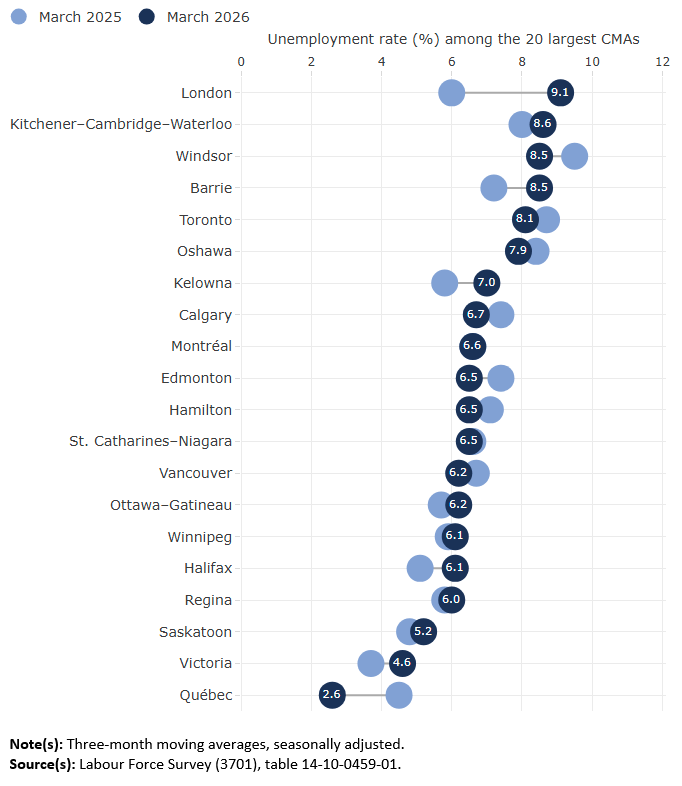
Unemployment rates in the province's biggest cities were as follows:
Nationally, average hourly wages rose 4.7 per cent year over year in March, the fastest pace since October 2024.
StatCan said part of the increase reflects changes in the composition of employment, with fewer lower-paying jobs in the mix.
Adjusted for those factors, wage growth was 3.6 per cent, in line with recent months.
On a year-over-year basis, total employment was up by 87,000 positions in March.